Saturday, March 31, 2012

Why I Love Reading: How Georgie Radbourn Saved Baseball

For those of you that don't know, I am a die hard New York Mets fan. I love baseball and following my team throughout the year. It's not my favorite sport to play but there's something indescribably great about watching it, especially at the park. So for Emlyn Chan's Books That Made You Love Reading Challenge, in honor of baseball coming back, I re-read possibly my favorite picture book from when I was younger, How Georgie Radbourn Saved Baseball by David Shannon.

It hasn't been too long since I've read this one, it's the only picture book that has stayed with me throughout college and afterwards and there's a reason. The story is great, if short. It starts with the tale of Boss Swaggert, a ballplayer who gets booed off the field and turns to finance. Bitter, he works and gets baseball outlawed arguing that ballplayers make too much money while people starve. But when he does, spring never comes back. No baseball, no spring. It's a sad time. Then Georgie is born and the only thing he can say is old illegal baseball terms. "Batter up!" instead of "I'm ready." "No hitter!" instead of "look out!" This all leads to Georgie eventually having a three pitch showdown with Swaggert to get baseball back or go to prison forever!

Boss Swaggert
As a kid, the story is just fun. The big evil man outlaws baseball and the kid saves the day! As an adult though, it's amazing to see the political themes at work in this story I first read when I was six. The communist overtones are fairly obvious, Boss Swaggert even looks Russian. They've taken the money from the rich (ballplayers) and distributed it to the people except that everyone is miserable now. From the 'Factory Police' to the Radbourns standing in lines, it's easy to pick out the Soviet comparison.

What's interesting though, is how these themes are very true and yet take on a whole new meaning 18 years after the book. In the times of Occupy Wall Street and the 99%, it seems even more plausible than it would have in the '90s for something like this to happen. All it would really take is one frighteningly persuasive person.

In the book Boss Swaggert buys up lots of newspaper, radio, and TV stations where he talks about destroying baseball and during one speech has a line "Let's tear down the ballparks and build factories instead. Then everyone will have jobs!" Completely different ideology aside, I couldn't help but think of Rush Limbaugh as I read this part. All it really would take is one properly placed, well spoken extremist to do something like outlaw games if it meant more jobs for people.

If you haven't read Georgie Radbourn, I can't recommend it enough. Pair with Field of Dreams, a hot dog and a beer for true baseball excitement. That line started as a joke but it actually sounds like an amazing day... I'm gonna go to the grocery store.

Tuesday, March 27, 2012

Webcomic: Lottery Winners

This isn't actually my joke, I heard it from my dad years ago but the $363 million jackpot
tonight reminded me of it and then a webcomic popped out.

Friday, March 9, 2012

New Webseries: The Grind

New webseries is afoot and that means it's shameless plug time! But it's my blog so, I'll do what I want.

Entitled 'The Grind', it's a video game news/sketch comedy series that I co-wrote with my friend Greg Goodness. It was produced by old college buddies at Brilliant Morgan Entertainment and Gorilla Nation Media. Today is the first of a twelve week run!

Check it out! Let me know what you think!


Wednesday, February 29, 2012

I Wish I Was an Animorph

Whenever anyone asks me what super power I'd want to have, right at the top of my list is the best power ever, Animorph power (well, that or time travel but for the purposes of this intro, this is what I'm going with). So for my February entry into Emlyn Chand's 'Books That Inspired You' challenge, I went back and starting re-reading Animorphs by K.A. Applegate.

As of now I'm two books back in and it is so much fun. I immediately remembered all the reasons I loved this book. The characters were believable and genuinely likable. They had normal problems that you would expect teenage kids to have. But beyond that there were aliens and superpowers. In one story. Win. Also the books were very quick so you felt badass after reading a book in a single day.

As for the writing itself, I actually found it very interesting. It's been a while since I've read a legitimately young adult fiction novel and it was interesting how simple and clear the writing style is. Not dumbed down necessarily, just simplified. I'd forgotten that all the Animorphs books were written in the first person but it lends itself nicely. Makes every emotion more intense even though, as I've said, the storytelling is simple and to the point.

I still remembered about half of what was happening in the stories. Enough to remember what was going to happen but not how, so reading was fun. The thing that I really admire more now than then was the world that K.A. Applegate created. All these amazing alien creatures with vastly difference evolutions and yet all totally believable (well, to a scifi geek). It's the kind of world I strive to create.

And yes, it has inspired many a dream of being an Animorph and what it would be like to change shape and become another animal. What would it be like to be within the mind of a bengal tiger? K.A Applegate gave me a window.

I still haven't reached the arrival of my favorite character (Ax the Andalite) so my plan is to reread the entire 52 book series. The other thing about Animorphs is that I never finished it. I got to maybe book 40 or so. Now I plan on reading them all. Expect an update in one of these blogs later this year after I've read 'em all.

Monday, January 30, 2012

The Hobbit: Or a Review That Will Go There and Potentially Back Again

To recap: this year as part of a challenge from Emlyn Chand I'll be reading twelve books from my childhood and reflecting on how it's a different experience years later. Really it's just a good excuse to read some books I haven't read in a while and blog about 'em.

Well, anyway, the first book I went with was The Hobbit, which I first read in the 6th grade and haven't read since. This was in no small part influenced by seeing the trailer for the new movie. That trailer is unreal and after I saw it, I realized I couldn't remember most of the actual plot details from the book! So, with my fancy new Kindle, I downloaded The Hobbit Enhanced Edition. This fancy edition comes with full color versions of Tolkien's own drawings spread across the book AND audio recordings of Tolkien himself reading/singing passages, which added a new piece of fun to re-reading the book.

One of the first things that I noticed while reading was the style of Tolkien and it's something I do in my writing but to a lesser extent (and not as well, I might add). He does it as if he's actually narrating, not writing. He's telling you a story before bed, side comments included. It's such a remarkable violation of everything you've been taught about writing, how could I not love it?

Writing in grade school, my teachers always said I write too much like I'm talking but I always felt that was better for reading. Maybe I wasn't fully aware of it at the time but somehow I knew that if something reads like it's from a friend, you'll be warmer to it and thus you'll be more willing to trust and join the characters. In The Hobbit, we don't just get Bilbo's tale, we get Bilbo's tale the way it would be told around a campfire. There is no more classic way to hear a story.

After I finished the book my biggest revelation was simply that I had forgotten how good it really was. But beyond that, I'd forgotten how much I enjoy a good fantasy book. I've been reading so much 'hard' science fiction recently that I forgot how much fun it is to enter a world that is completely separate from our own. Little unassuming Bilbo goes off on his adventure and encounters trolls and goblins and dragons and those are just, plain fun.

There are possibilities here.
What was really cool about this reread is that it got me thinking about stories and worlds I'd left behind long ago. And there's no reason to leave them behind. I never thought they were too childish they just... weren't what I was doing at the moment. It started me questioning some of the fundamentals of my storytelling and that is more than I could have possibly asked for (it even inspired a rather fabulous idea for a web series that will combine my more current love of science fiction with the older love of fantasy in a most intriguing fashion).

At the end of the day, The Hobbit is probably one of the most purely fun reads that I've had in a while and I can't wait to reread The Lord of the Rings later this year.

Thursday, January 12, 2012

I.M. Literate

Well, it's a new year and that means setting goals. One of the goals I've set for myself this year is to both read and write more often. The Kindle my parents gave me for the holidays will undoubtedly aid me in the reading part and I intend this blog to take a brunt of the writing part of it.

Today I was reading some posts on my friend Rachel's blog (Coffee and Cigarettes) and in turn followed that to a blog I had, admittedly, never been to before. But Rachel's post spoke of a challenge and I the competitor in me said "what have you got?"

The challenge from author Emlyn Chand is basically to read 12 books from your childhood (one per month) and then blog out the results. Will the stories hold up over time? Will they affect me the same way emotionally as the first time through? Do I even remember the story the way it actually happened? How much have I really changed in the years since I've read these books? These questions and more await their answers....


I haven't figured out ALL the books I plan on reading this year but here are a couple I plan on getting in at some point during the year.

  • The Hobbit by J.R.R. Tolkien
  • How Georgie Radbourn Saved Baseball by David Shannon
  • Yertle the Turtle by Dr. Seuss
  • Harry Potter by J.K. Rowling (let's say all of them for now)
  • 2001: A Space Odyssey by Arthur C Clarke
  • Where the Sidewalk Ends by Shel Silverstein 

The challenge begins with a simple question: why do I like reading? I suppose it's very much the same as why I like watching television or movies and why I like playing video games, I like the escape. The real world can be boring, repetitive and dull. Books, movies, games; they all allow us an opportunity to experience things that we would never get to experience in the real world. Sure, there are endless great places and things to explore in this world but I can't go into space in real life (yet) and I definitely can't journey to lands like Middle-Earth but I can in my head. A book can take me there.

These stories can also give us hope. If our own story isn't going quite the way we wanted to, we can find another person who overcame even greater obstacles to save the world or meet the girl or just succeed at something.

Basically, books are a way to experience the impossible and I can't think of a better reason to read.


Wednesday, October 12, 2011

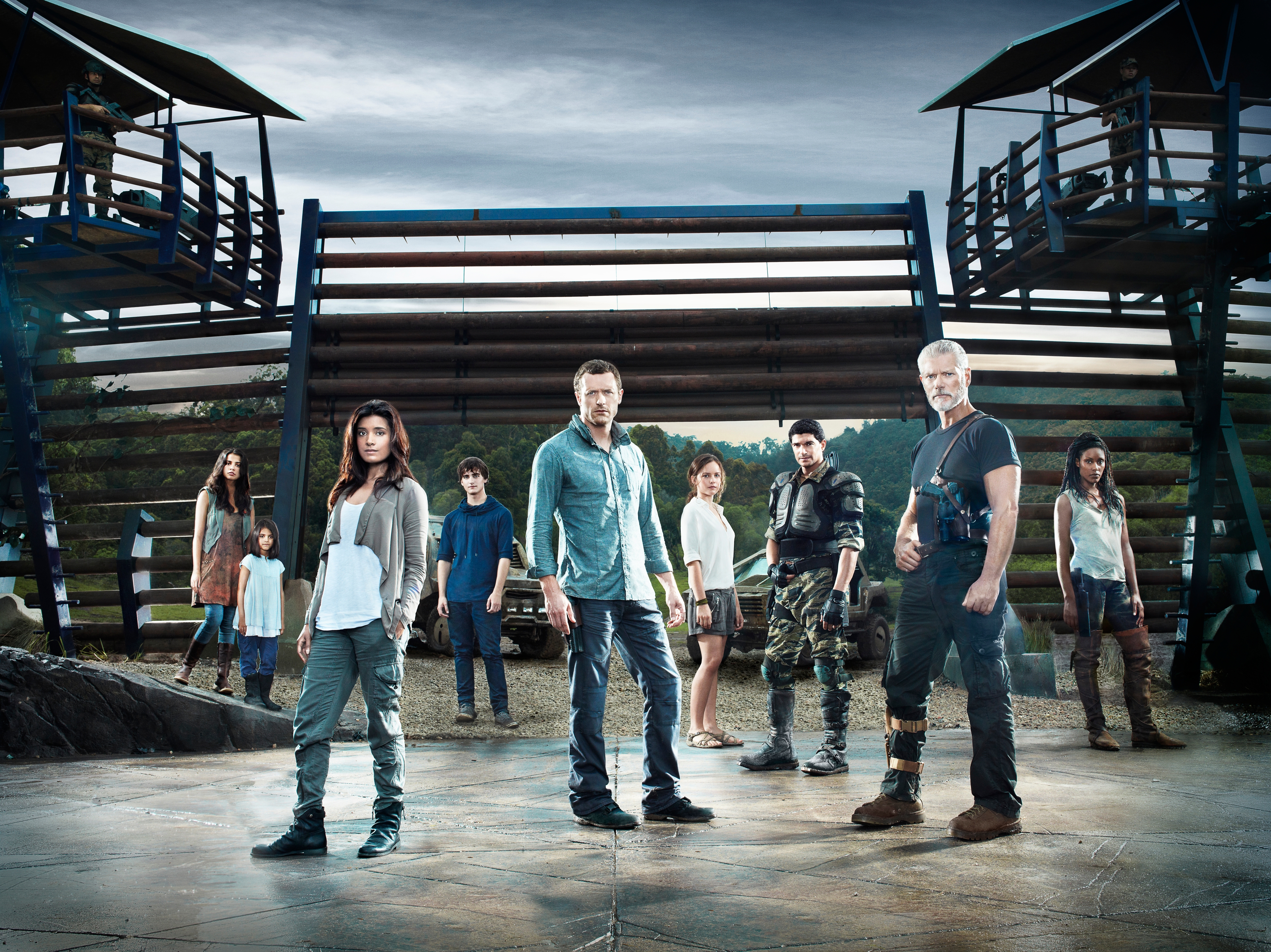
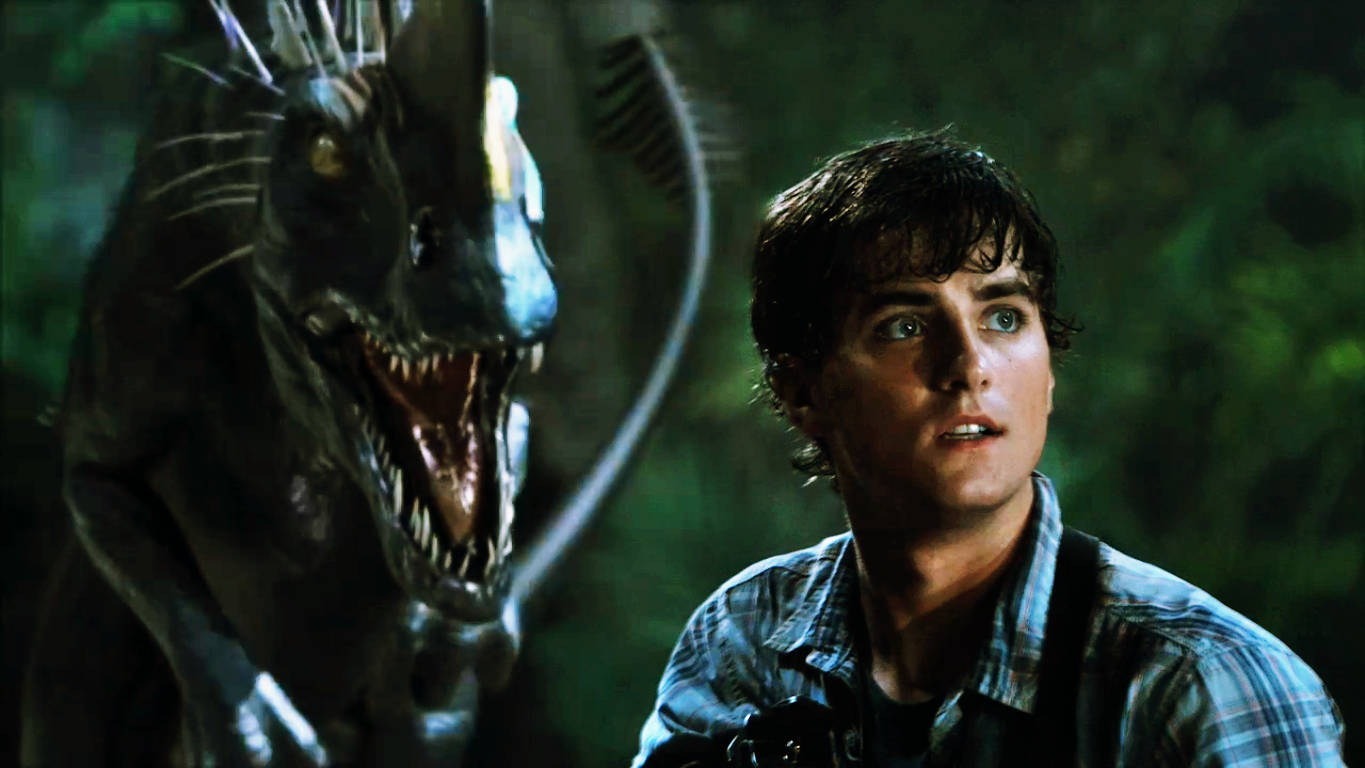
Terra Nova is Becoming a Let Down

This summer, during my now yearly adventure down to San Diego Comic Con, I was lucky enough to catch a sneak preview screening of the pilot of Fox's new dinosaur mega show Terra Nova. At the end of it, I was impressed to say the least. A dinosaur TV show that looks good? How could we go wrong? (Sorry Dinotopia.) I was genuinely excited. I even tweeted about it: "Great day at #SDCC [...] the Terra Nova pilot was unbelievable." A sentiment I discovered retweeted by the shows executive producer Jon Cassar much to my surprise and internet age excitement.

Unfortunately, since the pilot, the show is not showing good signs.

**Fair warning: SPOILERS are ahead.**

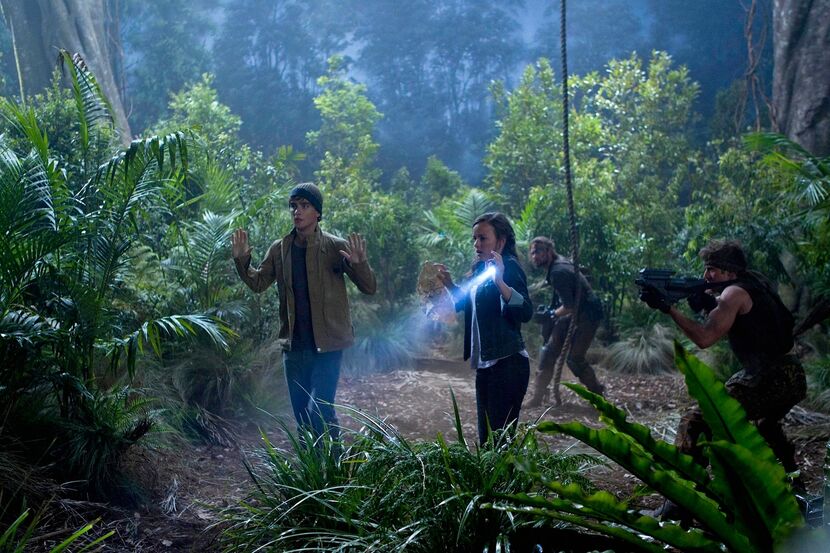
When the pilot aired, I loyally tuned in as soon as I could to watch the pilot again. Still excited. The marriage of a dystopian future with a dinosaur colony? It was like someone made a show for me and the mathematical diagrams that the kids find out in the jungle had started building a Lost-like intrigue. What are the Sixers goals?? Who sent them? Why does the time rift exist? So many questions! I couldn't wait for next week.

Then the second episode aired and it was.... decent, I guess. It felt like a midseason filler episode rather than something that was supposed to keep an audience on the hook. The little mating dinosaurs were going to eat them alive cause they were on their mating grounds! Interesting concept, you've got me. Oh and Elizabeth got in because an old boyfriend Malcolm recommended her? Hmmm, I wonder who this guy is. Maybe he's the Sixer's spy!

It was a good plot line but it didn't really heighten the drama of the show much. No one seemed to care about all those questions they'd established in episode one and that's what I wanted more of. The overall story of the show was barely pushed forward. The pilot had turned my expectations up to 11 and the second episode came in around a 6 or a 7.

But it's fine, it's just one rough episode and I really want to know what the deal is so I'm going to keep watching.

External drama? Check.
So this morning I punched up the ol' Xbox with Hulu Plus (no rush to watch anymore) and the show frankly let me down again. Again the episode was a fun storyline within this world, a strange pathogen is wiping out peoples memories and the only way to prevent it is to infect people with the common cold! Amnesia is a bit used but I still enjoyed the ride but honestly, I'm not hooked the way I should be. Not after 3 episodes and four hours of television.

Will they? Won't th- oh they did.
The problem is that while there is plenty of external drama to deal with (Sixers, dinos, disease) there seems to be almost NO genuine internal drama for these characters. Josh went back to being nice to his dad and everyone in the family is happy in Terra Nova. It only took till the third episode for Josh to kiss Sky and for Maddy to get a date with her super nice soldier boy. There was no time for romantic tension to build.

So what's the tension? Oh, Sky is too nice and she's going to help Josh get his girlfriend there from the future? Malcolm's still obviously got the hots for Elizabeth but he seems like too nice a guy to do anything about it. Our main characters are all pretty happy so why are we still watching? I know when I'm writing a story I'm too often tempted to protect my main characters. They're a part of me and I want the best for them! But what's best for them does not translate to what's best for the show. It seems Terra Nova and the Shannon family have fallen into this trap.

Lost took even longer than Terra Nova to really introduce the big mysteries but the viewer is hooked from minute one and they're not going anywhere. So why? Immediately we knew that most of these characters had real problems. They were criminals, drug addicts, or missing their husband but grasping to the belief that he was alive. Later on, romantic story lines kept viewers watching. Sawyer or Jack?! Juliet or Kate?! Who winds up with who?!? There was extreme intrigue from the get go and that's what Terra Nova is unfortunately missing. 

Yes, at the end of the episode the Sixers pop up and they've got their bartender mole who's now going to hire Josh. They hint at the manipulation of Josh's girlfriend. If they spend their time in the future turning her into a Sixer we could have some crazy possibilities on our hands. Maybe Josh joins the Sixers and it's Shannon family civil war! Is Malcolm a Sixer spy too? Maybe he'll kidnap Elizabeth!
An intriguing image from next week's episode: What Remains

Ok, those are extreme ideas but if the show do some extreme shaking up soon, even a sci-fi/dinosaur/television loving fool like myself might just start tuning out.

*Terra Nova airs on Fox at 8/7c. Photos are courtesy of terranova.wikia.com

Tuesday, October 4, 2011

Unedited Rant: I Don't Wanna Grow Up

Today, it's personal.

As I'm sitting at my desk plugging away on time wasting newsfeeds about the iPhone 4S, I couldn't help but overhear the banter coming from the cubicle over. Without going into specifics about who these people are or what they do, know this: the cubicle contains four 30s-40s women, some married, some not. Needless to say, I have some interesting conversations. Today's topic though, ticked me off just enough to blog about it.

I'm paraphrasing but the conversation went something like this:
Woman #1: Any man that's over 40 and single must have something wrong with him.
Woman #2: It's this town; it encourages the Peter Pan Syndrome. They just refuse to grow up.
Woman #1: Yeah, there are no real men in this town. 

This is the problem I have with dating and why we guys (and by we I'm mainly referring to the nerd crowd) find it so difficult to put ourselves out there. This wasn't a dumb, ignorable article in Cosmo, this was straight from the horse's mouth, pure eavesdropped truth. Yes, maybe not all women feel this way, and yes the idea is that I would never be able to be with someone that felt this way. I understand that but this is a belief that is fully out there, that loving the things that you loved as a kid somehow makes you less of a man.

I'll agree that Los Angeles does encourage us to keep living the dreams we had as kids but why is that a bad thing? Why should I not still love my comic books, video games and even kids movies?

So this just started another question turning. What exactly is it that makes a real man in their minds? According to them, there are no real men in LA. So okay, is a real man someone who swings an ax in the woods? Because I'll bet you can't find those in NY, Chicago or Miami either. Does that mean that anyone working in film & TV can't be a man because we chose a career that is essentially playing pretend on a large scale?


I decided a long time ago that I was no longer going to hide my nerdiness from the people I date but when I have to worry about people seeing me as a boy because I have some Captain America posters in my kitchen. Am I supposed to hide something that is not just something I do in my spare time but also in my professional life?


Well forget that ladies. I'm gonna keep playing pretend till the day I die and I'm going to keep my nerdy art. The fact that LA promotes the 'Peter Pan Syndrome' is a good thing. I want to stay young as long as I can, even if it's just at heart. A kid sees the world with wide eyes. With excitement. With a desire to explore. A belief that the world is ours for the taking, no matter what any grown up says.

I'll grow but I'll never grow up. It's just in the little ways that I show that I'm maturing... for example, now my Captain America posters are framed.

Wednesday, September 7, 2011

Webcomic Wednesday: The Ho Formula


Determine your 'Ho Factor':
H<0.01:    Truly chaste (or a dork).
0.02-.03:   You take sex very seriously.
0.4-0.9:     You could get out more but you've had a fair share of excitement for your age.
1-4:           You're not too wild, but you've been around the block a few times.
5-9:           Nothing wrong with playing the field... or the stadium      
10-14:       You should probably get yourself checked.
H>15:        A true embodiment of the manwhore/slutty lifestyle.


*The Ho Formula is for entertainment purposes only and The Kid in the Hat takes no responsibility if you or your loved ones are offended after scoring high on the ho scale...... skank.

Wednesday, August 31, 2011

Webcomic Wednesday: Job Hunting

For those who don't have some amazing super vision, you can either click the picture to read the text or read it below:

August 30th, 2011

The job hunt is tiresome. The wild openandwellpaidjob is rare and elusive, hiding among the jobyouwantbutisfilled or camouflaging itself as a winged unpaidinternship. One must approach the jobs with caution for if you think one might be within reach, it can vanish in an instant, leaving no hint of where it's gone.

I've heard spotty reports of mass gatherings of openandwellpaidjobs in certain places around the wide world. The jobs can be found posting themselves at these sites, as if waiting to be found. After exploring these options, I've concluded that there are simply so many hunters, one is lucky to even get a chance shot at the jobs.

But I continue stalking my prey, leaving baited resume traps and making job mating calls to draw the creature closer. My supplies should last me for the time being but the search for the openandwellpaidjob becomes more desperate by the day...

Tuesday, August 23, 2011

Webcomic: Poetic Umemployment

Occasionally words cannot contain the babbling going on inside my head so I'm going to throw in a webcomic every now and again. And so without further ado, my premiere attempt at the world of webcomics: Poetic Umemployment.
And hey, I'm new to this so if you've got thoughts, comments, criticisms... whatever. Please feel free to let me know in the comments!

Tuesday, August 16, 2011

Gravity is God and Albert Einstein was a Prophet

For as long as we've been around (roughly 5771 years), we've been asking the question: what is god? Now, I'm fairly confident in what I can say that god is not. God is not a dude in the sky with a white beard and a robe. God is not constantly watching us and judging us, putting us in a book under naughty or nice.

What I do feel that I know is that god is something that the human mind is incapable of comprehending. God is something beyond this plane of existence but peeking through into perceivable space. Confused yet? Just stay with me cause it makes more sense in a bit.

God is gravity. We are god. The planet is god. The same way that all of our cells somehow manage to work together and make us live, by some bizarre bit of chance, us being hear makes god "live". But just as those cells don't know how the whole body functions, we don't know everything about how the universe works. The mysteries of the universe: dark matter, black holes, gravity; these are the very definition of mystical forces.

Gravity is the force that binds everything together in the universe. Without gravity the galaxy doesn't stay together, the earth doesn’t orbit the sun, and we don't stay on Earth. Beyond this, gravity is at once the most simple of forces and the most complicated. It's easy to understand that an object falls to earth but understand the why, that's where we find god.

To completely understand the ins and outs of how the universe functions is such a lofty goal the comparison to understanding god is inevitable. Even if we understand every bit of gravity, where did the design come from? Why should the universe work that way? Why should we need air to live, or be limited to our small plot of dirt and water? It takes an amazing type of person to even begin to answer those questions. Perhaps even… a prophet.

I know, I know. Now I just sound crazy. A physics prophet but hold on there's room for them in my crazy theory. I'm not talking about Moses or Elijah. No, the prophets as I see it are people like Isaac Newton and Albert Einstein.

Every animal on earth understands on some level that when you drop an object it falls to earth. It's when man was able to think and ask the question why that we began to approach god. It was when the answers to questions like that were discovered that god was showing itself to people.

Now don't think that this is some Contact thing where god's going to show up as your deceased father. The way these "prophets" see god is that their mind takes a step forward in evolution. The mind of someone like Newton or Einstein has opened up to a new level of consciousness and seen a piece of the how the universe works in a way that no person had been able to see before.

A 2-D illustration of the spacetime curvature theory.
Einstein the best example. Until him, we'd understood the how of gravity. All objects have a gravitational pull, the bigger or more dense the object is, the more gravity it has. But why? Why should an object pull other things toward it just because it's larger and more dense? Einstein saw why, in short it was his theory of spacetime curvature. I won't get into describing it here except to say that it's like throwing a ball onto a sheet that has a weight in the center. The object goes towards the ball because the weight has created a well that the ball falls towards. (Wikipedia has a pretty nice beginner entry on spacetime for us scientist wannabes).

Einstein was the first to be able to see into this piece of the universe; this piece of god. Then, like a prophet does, he shared what he had learned with the rest of humanity, translating god into something we could comprehend. Compare it to the idea of Moses, translating the word of god into the Torah and the Ten Commandments. He translated god into morals that the Jewish people could understand.

That brings me to a final point. I'm Jewish. I don't consider myself an atheist or even an agnostic. Can I do this? I don't know. It's a bit of a crisis of faith for me honestly, but more so I believe in the morals I was raised on. The way I was raised, especially regarding religion, taught me to question everything and explore any theory, any possibility. My thinking and philosophizing brought me to this conclusion and I think that at the end of the day that’s what religion should preach above all us: question what you're told.

On researching this post I found a quote by Carl Sagan:
"The idea that God is an oversized white male with a flowing beard who sits in the sky and tallies the fall of every sparrow is ludicrous. But if by God one means the set of physical laws that govern the universe, then clearly there is such a God. This God is emotionally unsatisfying... it does not make much sense to pray to the law of gravity."
True, it's not fun to worship gravity itself. The laws of physics are significantly less dramatic than the laws of the Judeo-Christian god. Charlton Heston can attest to that. More than that though, a god that doesn't preside over us means that our lives are in our own hands and that is downright frightening.

If you know what this image is from... you win.
Sure, physics won't help us in a time of need and it won't smite wrongdoers, but what I don't agree with Mr. Sagan about is that this version of god is "emotionally unsatisfying". After all, what could be more magical than something completely and utterly unknown?

Friday, March 25, 2011

New Site Launch

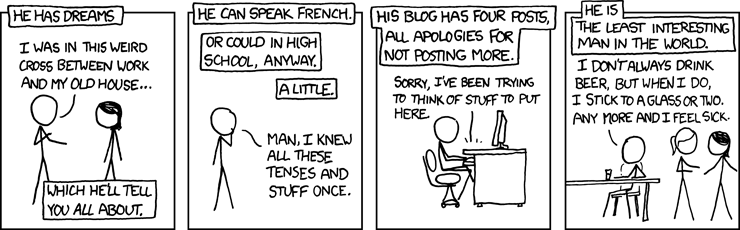
UPDATE 8/16/11 (i.e Months Later...): I'm relaunching this blog. The launch will be complete with regular posts! At least that's the plan. On writing this I can't help but think of a particular xkcd comic.


Let's hope I keep it somewhat interesting. Happy reading y'all!


Wednesday, August 11, 2010

What the &#*% is Transmedia: Before It Was Transmedia: Mephisto and Kevin

Although the word transmedia is fairly new, cross platform storytelling can be found in plenty of older properties. Every so often, I'll post up an old show or story on here that embodies this in what I hope will be an ongoing series of posts "Before It Was Transmedia". This time: South Park and the Primus song "Mephisto and Kevin" off the album "Chef Aid".

Written in 1998, the song tells the tale of the one of the significantly more obscure characters, Kevin aka "that little monkey guy". He never speaks on the show, except for a one time yelp in the episode "201". His character is never explained except as Mephisto's "son", the bizarre creature is a mystery to the casual fan but a dedicated fan will want to know just what the &#*% that little monkey guy is doing there.

Well, Primus (featuring Isaac Hayes) has the answer.

The song fills us in that Kevin is a genetically engineered pop star, born from Michael Jackson's sperm and an anonymous female singer's egg created by an old friend of Mephisto's. We even get to hear Kevin singing his song "I am Gopher Boy".

Personally, I love the song, it's a greatly humorous story with a catchy tune (Isaac Hayes even comments in the song about Kevin's tune being stuck in his head). From a storytelling perspective, what makes it great is that it manages to tell a very full story in five minutes and eighteen seconds.

The story works perfectly in this form because as much as this is a fun story, a full episode about a very tiny character like this will not play very well with the casual fans but it's a fun addition to the album they were putting out and fleshes out a minor mystery from the show.

So despite occurring years before anyone was really wondering what the &#*% transmedia was, this song is a perfect example of what transmedia can, and should, be.

Props: South Park is, of course, copyright property of Viacom and Comedy Central. If you'd like to purchase the song "Mephisto and Kevin" you can get the album "Chef Aid" on iTunes here or from Amazon here. You can check out South Park episodes free online (and legal!) here.

Wednesday, July 14, 2010

What the &#*% is Transmedia: Why Bother?

What is the point of transmedia? Why should anyone bother with stuff that's just on the Internet? It's not the actual show/movie/game so is there a point? Is it really doing anything positive for the show/movie/game?

I was recently luck enough to have lunch with an executive producer/writer on one of network TV's biggest shows (which I shall leave anonymous). We discussed new media and transmedia and he said, quite frankly, that he didn't think new media was worth the time and money.

I was shocked by the viewpoint if only in part because his show had recently expanded into the new media spectrum, though he chose to not be directly involved with the project. This, however, got me thinking about the bottom line reasons for transmedia. So, for today, let's ask why the %#*% we should do transmedia in the first place.

Transmedia focuses on the expansion of the mythos. The question after establishing that is simply why expanding the mythos is a good thing. After watching a movie or a TV show, Hollywood has already realized that people leave the theater or the living room wanting more (example: every unnecessary sequel ever made) and they don't want to wait for it. People hate waiting and we can take advantage of that.

Transmedia succeeds by fulfilling the fans natural desire for more as quickly as possible, sometimes even before hand. As soon as they can they get to their computer, they'll have the opportunity to jump into an extra piece of the story. This part is important because it establishes the franchise as a multi-platform experience from the get go. That way when you eventually expand further into the folds of the story, whether in book form, webisodes or whatever, they're ready and looking for it.

The goal is to keep their attention on the product for as long as possible. This is especially important on media that lives primarily on the web or another smaller market form. In this case, transmedia acts as a tool to keep the audience there.

Here's an example.

Let's say you're launching a new web series. The viewer of series #1 tunes in and watches the first episode. They enjoyed it but there's nothing else for them to look at so they click the next Youtube link and they're on to something else already. By the time the second episode launches, the viewer has forgotten about the series.

On the other hand, the viewer of series #2 watches their episode and then has the ability to read a short comic strip expanding the story of the episode just a bit. A tease for next week's episode. They've spent extra time with this series and got an extra amount of enjoyment out of it. That little extra time has taken them from going off and immediately diving into another series entirely. As long as the content is good, there's that much more chance for a return customer when episode 2 launches.

This can be the power of what transmedia does for a product. The extra content makes the experience wider and thus, more interesting. Bigger is not necessarily better and just having extra content is not enough. But if growing up a science fiction fan has taught me anything, it's that fanatics like more story and good story is what makes any media better than the competition.

Thursday, June 17, 2010

What the &#*% is Transmedia: Heroes of Transmedia – Beyond the Camera


   So you've watched every episode of Heroes and you've caught up with all of the webisodes but the problem is you still want more. Well good news: there is more. Heroes has taken advantage of many different forms of storytelling beyond the lens. A truly devoted Heroes fan can enjoy everything from graphic novels to a simple MMORPG (aka a Massive Multiplayer Online Role Playing Game for the less nerdy of you).

Graphic Novels
    One of the keys to any successful transmedia campaign (as it is for any piece of entertainment) is to know what your audience enjoys. Heroes is a show about superheroes and many of the themes are taken from comic books. Thus the natural train of thought is Heroes graphic novels.

    The 6-10 page graphic novels were released via the web from day one of the show and beyond the show's cancellation. A perfect companion piece, the novels allowed readers to get to know a great deal more about the universe of the show.
    Because of the fact that these stories were not limited to special effects budgets or actor availability or any of the other various issues that come up during filming, the writers (headed up during season four by staff writer Oliver Grigsby) were free to go in different directions with the stories. They could introduce significantly more complex powers (see Julien Dumont) and take characters to any part of the world that they wanted.

    During the fourth season, the graphic novels served the purpose of filling in stories of where characters had been while off screen, a question often raised on shows with so many interweaving plot lines. A perfect example of this is when Tracy disappears for several episodes, the graphic novel readers find out that she goes to work for Samuel hunting down an estranged carnival brother named Eli.

    Eli is an especially interesting case because the graphic novels are the first place he is actually introduced to fans. The dedicated fan is rewarded with a preview of things to come on the show. By rewarding fans in this way, NBC takes a big step in making sure that they can expect fans to come back again.

iStory
    A personal favorite (for very self involved reasons) is the Heroes iStory aka Interactive Story. Essentially, what these stories were akin to the choose-your-own-adventure Goosebumps novels. Players made choices on each page of the story as to where the characters would go or what they would do. Choices would lead you down different paths, each one affecting the outcome of the chapter.
    Conceptualized by digital writer Tom Inkel, these stories began during season three as a weekly game that fans could enjoy as an extension of what was happening on air and in the Heroes: Evolutions ARG. As readership grew, the iStory would begin involving webisode and even main characters from the show.
    Involving these characters meant that the stories could provide even more back story to on air events than was already being told via webisode and graphic novel. The real draw, however, of these stories was the interactive nature in which they were told. Since player's decisions affected the outcome, it gave the readers a feeling as if they were controlling what was happening on air.
    Each story offered several branches of each page, creating a huge amount of content for each story, as certain paths would reveal certain content and information, while other paths would give you something completely different. See the image left for an idea of how the story looks mapped out.
    During season four (the season in which I took over the iStory from Tom) the stories became directly tied to the show and webisodes (even carrying the same name, "Slow Burn"). Fans were introduced to the Bowmans, a family of firebreathers who had only recently joined up with Samuel's carnival. Stories were told from each of the perspectives (and occasionally both depending on which path was taken by the reader).
    Similar to the situation with Eli, these characters appeared on air several weeks after their introduction via the iStory. This gave the dedicated fans a fun, "oh look!" moment, when the Bowmans finally got there close ups.

(for more about the iStory, check out an interview with Tom Inkel at Heroes Wiki)

Heroes: Survival
    Everybody wants to have a superhero for a best friend right? Well with the online social networking game Heroes: Survival, fans got that chance. With space for a name, location, power description and bio, fans got the chance to create a hero that could live within the Heroes-verse. Helping characters in the iStory.

    An amazing example of fan interactivity, the game became a sort of Tamagotchi meets MMORPG. Fans would join factions, choose actions for their characters to do and lead their characters down heroic, villainous, neutral or reclusive paths.

     What made this game so much fun was that on many occasions during the summer and the fourth season, characters created by fans were directly incorporated into the iStory and on even a graphic novel.

    For example, during the Slow Burn iStory arc, Gail Bowman was sent on a mission to recruit specials for Samuel's carnival. She found a faction of people who called themselves The Guardians. This faction and some of the members who appeared in the story were created by a fan. To the right is a graphic created for the iStory of John Mulligan and the two player characters, Shard and Darkmoon.

    Now, if you're a fan of a show, what greater moment can you have besides having your character exist within the mythos of the show? With this promise out there, fans created thousands of characters and spent many hours (and many page visits) creating and maintaining their characters. A great amount of entertainment for these fans and direct involvement in the storytelling of the show.

Layering it All Together
    All of these things are fun and enjoyable on their own certainly, however what makes them work well is how they are integrated into each other and how the further down the chain you get the more of the big picture you start to form. Each layer reveals an extra piece of information that fills out the story you used to have and changes the experience in a positive way.
    Here is an example of the layering progression that could be found in season four as it built the character Amanda.
  • TV: Amanda is Lydia's daughter and they live at the carnival.
  • TV and webisodes: Lydia asked Amanda not to come to the carnival. She did anyway.
  • TV, webisodes and comics: Amanda left her home away from the carnival because she accidentally hurt her aunt with her ability, which she cannot control.
  • TV, webisodes, comics and iStory: Amanda gets help from Chris Bowman in controlling her ability.
  • TV, webisodes, comics, iStory and Heroes Survival Game: Amanda got help finding the carnival from fan created heroes.
     Adding some extra pieces to the puzzle doesn't make the it more complicated; it makes it bigger and more interesting, revealing new parts of the picture that you couldn't see before. Heroes' stories covered many forms of media platforms and storytelling devices, truly embracing the concept of transmedia.

The Thanks 
    In addition to everyone I thanked in the last post I would also like to thank Tom Inkel, Alexis Brandow, Abby Laspia, Jack Wei, Matt Neuenberg and Ryan Stewart all of whom worked tirelessly on the iStory and Heroes Survival Game.


NEXT TIME: Why bother with transmedia?

Thursday, May 27, 2010

What the &#*% is Transmedia: Heroes of Transmedia - Webisodes

    So you've read the introduction about what the #%&@ transmedia is and you're still confused. Don't worry, you'll get the hang of it. Personally, I've always felt that seeing an example is the easiest way to learn.
    A perfect example of the way a television show can expand into transmedia is one I have personal experience with, NBC Universal's Heroes. The show's writing staff and online team do an incredible job expanding the story across multiple platforms and I was lucky enough to be a part of it for a season and a half.


The Show
    So where to start? For the purposes of our little demonstration, let's focus on season four. The actual show is the beginning of the experience. While we tend to focus on the aspects of transmedia that are about expansion, the story can't begin without the main content. It seems obvious but this is where it all starts.

    NBC airs the show on their network weekly and puts in online, VOD and eventually DVD. Here you get to follow the action with all of your favorite characters in a regular television environment. It's normal, comfortable and regular. Here you get your main storyline(s).

    Now let's assume that you're a big fan of the show, you can't get enough of these superheroes; bottom line, you want more. Here's where your transmedia experience continues.


The Webisodes
     Easily the most prominent content online are the webisodes. Since these are essentially miniature episodes, they're the easiest for the casual viewers to slide into. Heroes has had several different methods of approaching their webisodes.

    During the fourth season, in a partnership with Sprint, NBC devised a new form of webisodes. These 90 second long episodes, known as "Slow Burn" were broken into two parts, a 30 second piece that aired during the episode and a 60 second follow up that was viewable online (pictured above) or on Sprint phones.

   These webisode pods tell the story of Lydia, a fortune telling carnie with the ability to see a person's innermost desires. This is our side story. If you only watch the aired episodes, Lydia appears to simply another member of carnival boss Samuel's entourage. However, if you follow through and watch "Slow Burn," you learn that she has an estranged daughter who is developing a dangerous ability of her own and that Lydia is hiding the whole situation from Samuel.

    What this accomplishes is to add a level of depth to a more minor character. We get to find our more about her relationships with characters like the knife wielding speedster Edgar. It's in these webisodes that we're first introduced to the romantic feelings that he has for her.

    Knowing things like this early on doesn't just add a couple minutes of extra entertainment for a fan, it changes the way they watch the show. Knowing about Edgar's feelings, make on air scenes with him and Lydia take on a different meaning. Something a more casual fan might overlook could turn out to reveal something altogether different to the more dedicated fan.

    For example, if Edgar sees Lydia getting close to Sylar, the casual viewer may think Edgar is merely spying on what Lydia is doing but the fan who has seen the webisodes knows that he is watching them out of jealousy.

    In this way the webisodes have not only added to the episode but also changed the way you look at the main show/storyline. The webisodes/side story expands the mythos of Heroes and adds a level of depth you won't necessarily get with other shows. This keeps fans interested and coming back for more.


Credit Where It Is Due
    This post would of course be incomplete without acknowledging the people who worked hard to make these stories come to life. Everyone from EPs Tim Kring and Dennis Hammer, webisode writers Ollie Grigsby, Foz McDermott, Zach Craley, Jim Martin and Harrison Wilcox, webisode directors Tanner Kling and Chris Hanada (and everyone with Retrofit Films), NBC.com team Carri Wagner, Joe Tolerico, Peter Hammersly, the intern Kelly Mack, and so many others. And of course everyone else on crew with Heroes (if I left anyone out… my bad, beat me up later).


If you'd like to watch the Heroes webisodes please check 'em out http://www.nbc.com/heroes


NEXT TIME: Heroes: Transmedia Storytelling Beyond the Camera

Monday, May 17, 2010

What the &#*% is Transmedia: Explaining This Mysterious Thing

I recently attended my five-year high school reunion. As expected, the standard first question (other than the generic, 'how've you been?') was, of course, 'what are you doing now?' Never have I been met with so many blank stares as when I responded, "I'm a transmedia writer". I got plenty of polite nods followed by "trans-what?"

In the interests of simplicity in an environment where the people I was talking to were getting progressively more intoxicated as the night went on, I simplified the concept of transmedia by just responding, "I wrote internet stories and content for Heroes". But transmedia is certainly not that simple. It's bigger and much more complex than just 'internet content'.

So what the &#*% is transmedia?
Transmedia is the process of telling a story over more than one medium. Now you might think, well there have been tons of films adapted from/into books or graphic novels or video games or even theme park rides. Is that transmedia? No, it's not. That's the retelling of a story. What transmedia aims to accomplish is to add to a story in a way that cannot be done by simply watching a television show or a film.

The goal of any good transmedia team should be to create a layered experience. That's the key to the entire project. Transmedia is about multiple platforms and multiple stories. Sound complicated? It's not.

Think about any good television show or film. The story is told with multiple settings, characters with varying connections and separate plotlines. Each piece guides you towards the final goal of the story.
In most of these, you can understand the main character and their story even if you missed a scene or two from the B-story or subplot but knowing what happened in those scenes enhances the main story. The characters lives become more full and real because you can see more of the fake universe that they reside in.

Transmedia takes this concept to the next level. You get one story from the movie or show but you know that each one of those characters has a feature length story of their own to tell (if not an entire series). There are a million different ways to tell these side stories and here is where the transmedia team comes into play; to fill in the gaps in the story that viewers never even realized were there.

Each extra piece of media adds a little bit more to the story. Not every piece is necessary to understanding the story either, allowing fans to decide how much they want to be involved with the show. The casual viewer can check out a couple of 'in-universe' sites and not feel like they're missing anything from the show. On the flip side, a truly hardcore fanatic can watch the webisodes, read the fake character blogs and get involved in as many aspects as the producers want to throw at them.

Each of those two fans gets an experience equal with what they wanted from the storytellers. Since the simpler layers do not require delving into the more intense pieces, the first fan does not feel cheated. The second fan however, feels more connected to the story and the characters because they understand things about the show universe that the first fan doesn't.

That second fan gets many more hours of entertainment and will enjoy the product that much more. At the end of the day, this is the goal of any producer, transmedia or no.

To sum it all up, transmedia is the process of telling a bigger story than what one film or show can do in the time it has or in ways that it simply cannot do. Interactive games, graphic novels, webisodes and so many other methods producers now have at their disposal; these are the building blocks of a new method of storytelling.


So thanks for reading my first musings as a blogger. I hope that in this blog we can explore the way that transmedia is adding to and changing the way we think about story. Check back in a week or so for my next post.


NEXT TIME: An example from some transmedia Heroes